Actor Depardieu joins exodus of French wealthy fleeing 75% tax rates. #rsrh

http://www.france24.com/en/20121210-gerard-depardieu-tax-shelter-belgium-france-wealth-hollande-nechin

France’s most famous leading man, Gérard Depardieu, has joined the flight of France’s wealthy to less tax-heavy destinations, establishing his residency in the Belgian border town of Néchin.

His self-imposed exile will make him one of the highest-profile celebrities to ditch France because of the country’s stiff taxes on high earners. French President François Hollande has made good on his campaign promise to tax revenues above €1 million at a rate of 75 percent.

In September, the president’s ruling Socialist government unveiled a string of deficit-busting measures, including the infamous levy on millionaires and a new 45 percent rate for those earning above €150,000 per year.

Reports of his tax evasion (sic) plans are the latest in a string of bad press for Depardieu. Last month he was detained after falling off his scooter in Paris and failing a subsequent alcohol test. He made headlines again last week after recording a duet with the daughter of Uzbekistan’s President Islam Karimov, who has been heavily criticised for heading one of Europe’s (sic) most repressive regimes.

Depardieu outraged fellow passengers in August 2011 by urinating in the aisle of an Air France flight as it prepared to take off, forcing the plane to turn back. (sick)

Posted in Uncategorized | Leave a comment

DPRK citizens urged to show loyalty with Kim Jong Il memorial offering — or else.

http://www.dailynk.com/english/read.php?cataId=nk01500&num=10126

NK Puts Out Sun’s Park Funding Call
By Kim Kwang Jin
The North Korean authorities have requested that people around the country show their sincerity and dedication to the regime by contributing to work on the latest of the country’s major idolization projects for the Kim family.

“Because they haven’t said how much to give, people are stressed out trying to work out what to do,” the source added. “There are people who are struggling to make ends meet working really hard to get it done, because they guess their loyalty is going to be judged according to their donation.”

This is just the latest in a long line of idolization projects for deceased members of the Kim family to which the ordinary people have been required to contribute, following on from things like Kim Il Sung and Kim Jong Il statues, towers of eternal life, mosaic images and greenhouses for the cultivation of Kimilsungia and Kimjongilia, the two flowers created to honor the former leaders.

Technically speaking, people are asked to contribute the inputs needed for the construction work such as cement, but in reality most households do not have access to such things and contribute money instead.

Posted in Uncategorized | Leave a comment

NASA Nighttime Photos Show Drilling Rig Hot Spots

Nasa earth_01

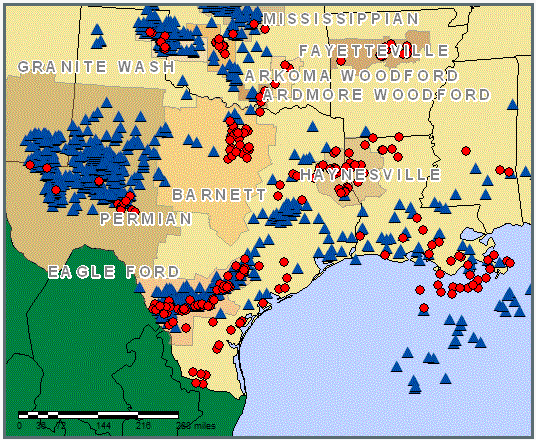
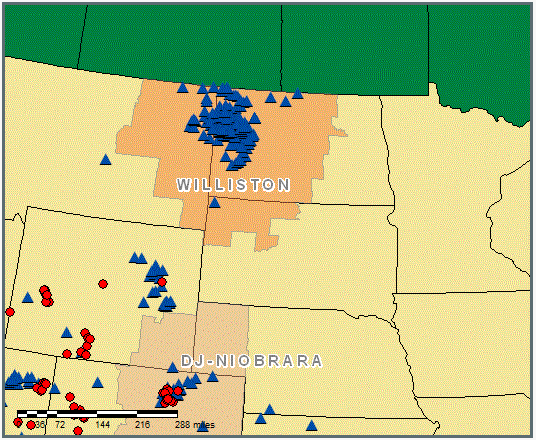
Large cities and major interstate highways are readily identifiable. But what’s going on in South Texas, West Texas and North Dakota?

12-12-2012 9-32-52 AM

Baker-Hughes, a major service company, has an online rig locator. In the detail maps below, each blue triangle represents an active rig targeting oil; red circles represent rigs targeting gas.

12-12-2012 12-14-23 PM

12-12-2012 12-15-45 PM

Posted in Energy | Tagged , , , , | 1 Comment

Incident on Carondelet in the CBD

It happened so fast. I did nothing to stop the kids or help the old man. It haunts me still.

It was still light, a typical late summer evening, as the events unfolded. In 1980, I was working in downtown New Orleans. It was a short four-block walk from my building, through the Central Business District, to the Canal Street bus stop. From there, the Cemeteries bus would take me to my Mid-City apartment.

I had worked about an hour late, late enough that most of the commuters had cleared off the sidewalks. The last block of Carondelet Street as it approaches Canal was, at that time, a mix of sandwich shops and storefronts which were mostly closed for the day. Across Canal, Carondelet’s name changes to Bourbon Street, the seedy but bustling main drag (pardon the pun) of the French Quarter. Continue reading

Posted in Uncategorized | Leave a comment

Boustany 61%, Landry 39% in LA-03 #rsrh

http://staticresults.sos.la.gov/12082012/12082012_Congressional.html

http://www.theadvertiser.com/article/20121208/NEWS01/121208016/Boustany-defeats-Landry-take-3rd-Congressional-District-seat?odyssey=tab|topnews|text|FRONTPAGE

Boustany, R-Lafayette, and Landry, R-New Iberia, were forced in a runoff election after neither incumbent earned more than 50 percent of the vote during the Nov. 6 primary election. With 54 percent of the precincts reporting, Boustany had garnered 58 percent of the votes reporting, or 32,128 – enough to call the race in his favor. Landry, at that time, had 42 percent of the vote, or 23,029 votes. …

The race has attracted widespread media attention as pundits speculate about the future of the Republican Party after President Barack Obama’s re-election and Tea Party losses across the country. Boustany is an establishment favorite and ally of House Speaker John Boehner, while Landry is a Tea Party freshman who rode a wave of conservative resurgence into the House.

Posted in Uncategorized | Leave a comment

Is a Carbon Tax in our Future?

As folk wisdom tells us, “Where there’s smoke, there’s carbon emissions.” And where there are carbon emissions, there are internationalists hell-bent on hobbling the American economy in the name of Global Warming. Several recent signs:

Posted in Climate, Energy, Environment | Tagged , , , , , , | 1 Comment

Big Push for Kim Jong Il Anniversary Atmosphere

http://www.dailynk.com/english/read.php?cataId=nk01500&num=10095

The North Korean authorities have begun to tighten up domestic security in the run-up to the 1st anniversary of the death of Kim Jong Il on December 17th, while also stepping up the domestic propaganda onslaught.

A source from Yangkang Province told Daily NK on the 2nd, “They have issued an order telling us that from December 1st we should avoid causing any trouble and must devote ourselves to our organizational life.”

“In other words, it means ‘don’t do anything that might run counter to the creation of a suitably mournful 1st anniversary atmosphere,’” she explained. …

According to a second source, North Korea’s upcoming long-range rocket launch is also part of the process of creating the correct atmosphere for the commemorative anniversary. …

Meanwhile, today’s six-page edition of the Chosun Workers’ Party publication Rodong Shinmun featured three pages of commemorative propaganda about Kim Jong Il’s life and work, including the words and sheet music to ‘The Song of General Kim Jong Il’ on the front page, and an article commemorating North Korea successfully becoming a nuclear-possessing state on page three.

Posted in Uncategorized | Leave a comment

Lesser Prairie-Chicken May Join Threatened Species List

http://www.rigzone.com/news/oil_gas/a/122509/Lesser_PrairieChicken_May_Join_Threatened_Species_List

From the U.S. Fish & Wildlife Service:

Once found in abundant numbers across much of the five states of Colorado, New Mexico, Texas, Oklahoma and Kansas, the lesser prairie-chickens’ historical range of native grasslands and prairies has been reduced by an estimated 84 percent. The State of Colorado has listed the species as threatened. The Service first identified the lesser prairie-chicken as a candidate for ESA protection in 1998.

The Service is working with the five states to encourage voluntary conservation of the species and its habitat. Conservation agreements are currently in place in Texas and New Mexico, with another under development in Oklahoma. Additional partnerships between federal agencies and private landowners are contributing to restoring, reconnecting and conserving habitat for the lesser prairie-chicken. Most significantly, the Natural Resources Conservation Service’s Lesser Prairie Chicken and Working Lands for Wildlife initiatives have provided funding and technical assistance to private landowners seeking to improve habitat for the prairie-chicken.

The Service continues to work with partners and private landowners to develop voluntary conservation agreements that will protect the lesser prairie-chicken and the native grasslands on which it depends, while assuring that ranching, agriculture and other economic activities can continue regardless of whether the species is listed.

The proposal is part of the Service’s efforts to implement a court-approved work plan that resolves a series of lawsuits concerning the agency’s ESA listing duties. The intent of the agreement is to significantly reduce litigation and allow the agency to focus its resources on the species most in need of the ESA’s protections.

The lesser prairie-chicken is a species of prairie grouse commonly recognized for its feathered feet and stout build. Plumage of the lesser prairie-chicken is characterized by a cryptic pattern of alternating brown and buff-colored barring. Males display brilliant yellow-orange eyecombs and reddish-purple air sacs during courtship displays.

Posted in Uncategorized | 2 Comments

Name the Oil-Friendly Governor #rsrh

“The exemptions from [environmental restrictions] are precisely what [the Governor] sought late in 2011 when he replaced two top officials in the state Conservation Department with appointees who agreed to ease environmental restrictions on energy companies.

“In the months afterward, the department granted oil companies 19 exemptions statewide — a six-fold increase from the year before — and 14 energy firms gave more than $1.1 million to the governor’s tax initiative … which voters approved in November.

“‘I’ve never seen [an environmental] exemption I didn’t like,’ [the Governor] told reporters at a news conference earlier this year.”

Jindal? Perry? Fallin? Nope. It’s none of the above. Continue reading

Posted in Energy | Leave a comment

LNG and Natural Gas Exports: A Primer

Natural gas exports? What seemed impossible a mere five years ago is becoming a reality. The shale gas revolution has blessed us with burgeoning domestic supply and historically low prices for gas relative to crude oil. Cheniere Energy (ticker symbol LNG) is among a small group of American companies planning the construction of facilities to export liquified natural gas. The technology is fascinating and the economic promise is compelling.

But a political battle looms over expansion of gas exports. Sen. Ron Wyden (D-OR), the presumptive new head of the Committee on Energy and Natural Resources, has already declared his opposition to natural gas exports. There is also opposition from large industrial users of natural gas who fear rising prices for their fuel and feedstock.
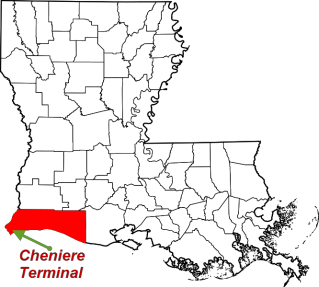
Map showing location Cheniere Energy's proposed LNG Export Terminal (Wikipedia Commons)

Map showing location Cheniere Energy’s proposed LNG Export Terminal (Wikipedia Commons)

Cheniere has secured permits (at a cost of $100 million) and is proceeding with plans to construct an $11 billion export facility at a site in Cameron Parish, LA. It is effectively a major expansion of Cheniere’s existing gas import facility, utilizing the existing deepwater port, gas storage facilities and pipeline interconnects. On site is a deepwater port that can accommodate Q-Flex and Q-Max tankers for export to overseas markets. (Due to Jones Act restrictions, shipments to U.S. destinations like Hawaii or Puerto Rico are not allowed; the entire world fleet of LNG tankers is foreign-flagged.)

If all goes as planned, the terminal will begin export operations in the third quarter of 2015.

The Technology

When chilled to -260°F, natural gas (methane, CH4) occupies 1/600th the volume it does at 60°F, at very near atmospheric pressure, making it possible to transport LNG in ocean-going tankers. The largest tanker class, the Q-Max, is as long as an aircraft carrier and has a capacity of 260,000 cubic meters; its LNG capacity is thus 5.7 billion standard cubic feet of gas (standard conditions 60°F & 1 atm). That’s roughly 8% of one day’s domestic production, or enough gas to supply 70,000 American homes for a year.

Liquifying this quantity of gas takes tremendous power.  Each of the Sabine Terminal’s four gas liquefaction trains will be powered by six GE turbines, each the equivalent of a Boeing 747 jet engine (gas fired, of course). Cheniere’s fixed cost to liquify 1 million BTU of gas is roughly $3.00.

The technology itself is not new. The U.S. has been importing LNG by tanker for years, but in relatively small quantities. Japan imports every cubic foot of its natural gas as LNG. Cheniere’s website addresses the safety and environmental risks:

Unlike other fossil fuels, [gas] is non-carcinogenic and non-toxic. Because it is lighter than air, it dissipates quickly and has shown to pose little threat to marine life when transported. In the history of LNG oceanic transportation, there have been no incidents of containment loss. … When compared to other fossil fuels, CO2 emissions are reduced by 70 percent.

LNG fires are highly unlikely because of the extremely delicate fuel to oxygen balance necessary for combustion. The industry has, however, put in place extremely aggressive safety measures to ensure that fires are prevented and spills are contained.

The Business Side

There is tremendous demand for natural gas in Western Europe and Asia, where gas trades near energy parity with crude oil. The price in Japan is in excess of $14 per million BTU, vs. $3.70 in the U.S. (today’s spot price at Henry Hub).

In order to finance the $11 billion capital invesstment for this project, Cheniere has contracted with four international LNG marketers/gas utilities (one each in the UK, Spain, South Korea and India). Each has contracted for approximately one train’s gas volume for twenty years on a “take-or-pay” basis; in other words, they will pay Cheniere’s fixed cost component whether or not they actually take the gas. In addition, buyers will pay Cheniere 115% of the cost of the gas acquired on their behalf to cover fuel and operating expense. Cheniere’s South Louisiana location and access to pipelines guarantees that gas can be acquired at or near the Henry Hub price.

If the plant were in operation today, the cost to Cheniere’s customer would be about $10.25 per millon BTU (115% of $3.70 plus $3.00 for liquefaction plus $3.00 for transportation, etc.).

None of that implies that this is a risk-free venture for Cheniere. A steady LNG export market depends on a substantial gap between the price of gas in the U.S. versus foreign markets. As recently as 2004, gas traded at or near parity with oil in the U.S.; in 2001, Cheniere “bet the farm” in a transition from being an oil and gas producer to being an LNG importer. That move didn’t work out so well, to put it mildly.

So will the current price differential hold? That’s anybody’s guess, and a risk that Cheniere and its financial backers are willing to take. I am in no position to evaluate the security of their customers’ “take-or-pay” guarantees, or their judicial recourse should one or all fail, but obviously that risk is a primary concern.

The Economic Benefits

Currently, the U.S. is a net importer of about 8% of our gas use, the bulk of that via pipeline from Canada. With a commitment to natural gas exports, the country could become a net exporter, helping our balance of payments to the tune of $7 billion per year.

From eia.gov

Natural Gas Prices 2011-12 (click to enlarge)

A healthy export market would stabilize prices, and thereby stabilize supply. With the natural gas prices that have prevailed over the last couple of years, few companies are intentionally exploring for gas. Much of the new gas on the market is produced as a by-product of oil. Gas at $4.50 per million BTU is still a bargain relative to oil, and is a price that would encourage more gas-directed exploration.

Construction of the $11 billion project would have a massive economic impact on Cameron Parish. One billion dollars of the total represents construction wages: employment would peak at 3,000 workers, compared to total parish population of 6,800. Between 100 and 150 permanent jobs would be created in plant operations.

Beyond the employment directly related to construction, Cheniere estimates that 30- to 50,000 skilled workers will be needed in upstream oil and gas to satisfy the additional 2 billion cubic foot per day demand created by the export market.

The Political Opposition

As mentioned above, Ron Wyden is one of the key opponents of LNG exports.

The issue hits home for Wyden. Five proposed terminals in Oregon and Washington would export coal to Asia, and the Pacific Northwest could serve as a launching point for natural gas exports as well.

Hold the phone. Export coal?! In fact, in 2011, the U.S. exported over 107 million short tons of coal to countries around the world.

Wyden and other Democrats fear the U.S. is exporting greenhouse gas emissions along with the fuel, making it harder to combat global climate change. They also want more studies on the environmental effects of the unconventional drilling methods used to tap natural gas.

On top of that, Wyden and congressional Democrats have said the U.S. might shortchange its newfound domestic energy security with increased exports. They say the sales would increase natural gas prices, undercutting the manufacturing industry’s competitive position.

This is hypocrisy of the highest order. Compared to coal, natural gas is environmentally innoccuous: no mercury, no sulfur and 30% of the carbon dioxide. Gas would likely displace coal in most markets.

Cheniere’s Sabine Terminal is fully licensed for export to both free-trade and non-free-trade countries. They would also like to secure permits for a second export terminal in Corpus Christi, TX. Competitors Freeport LNG and Sempra LNG also have export plans, but other than Sabine, none of these plants is licensed at this time.

As always, natural gas is clean, abundant and American. It’s up to us to use this resource wisely.

Cross-posted at RedState.com.

Posted in Energy, Louisiana | Tagged , , , , | 2 Comments