@iowahawkblog: DNC Scientists Disprove Existence of Roberts’ Taxon #rsrh

http://iowahawk.typepad.com/iowahawk/2012/07/dnc-scientists-disprove-existence-of-roberts-taxon.html

“In order to disprove the Taxon, scientists at the HSWC devised a test experiment in their enormous CarneyLab bullshit accelerator. This test involved speeding a small mass of Facton – theoretically containing Roberts’ Taxon – and smashing it at near-light speed against a flaming super-dense ionized clod of purified bullshit.”

One of Iowahawk’s best.

Posted in Uncategorized | Leave a comment

Q: What do #fracking fluid and a kosher hot dog have in common? A: Sodium erythorbate. #rsrh #natgas

http://fuelfix.com/blog/2012/07/03/fracking-chemicals-aren%E2%80%99t-hard-to-find-in-your-home/#6120-1

If you look closely, you can see it in the ingredients.

H/T @SAEverley

Posted in Energy, Environment | Tagged , , | Leave a comment

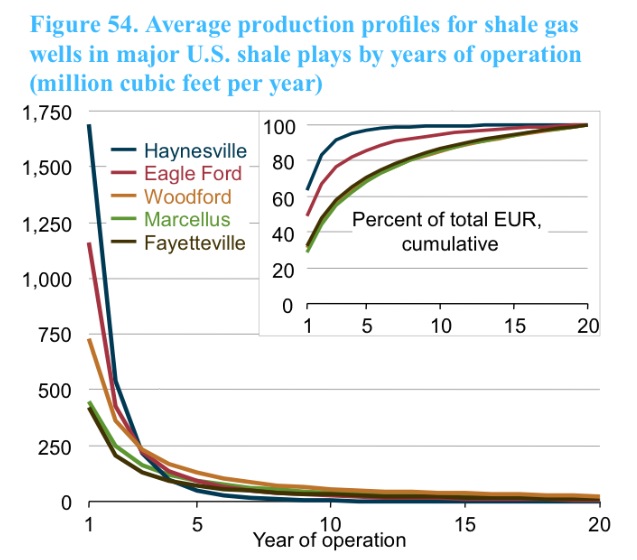
Natural Gas Economics: A Look Under the Hood

Christmas comes in June for energy geeks and graph junkies. Every year, the Energy Information Administration of the Department of Energy releases its Annual Energy Outlook (AEO), a compendium of 30-tear forecasts and analyses of energy sources and uses. The 212 page .pdf file contains tables, bar charts and area graphs galore, enough to provide blog fodder at least until Christmas (the December one).

This week’s installment is a look at production decline curves from selected shale gas plays. The extreme rates of decline experienced in these wells has interesting and far-reaching policy implications, although this angle is rarely described in the mainstream press. For the energy operator, the performance of his wells in aggregate determine the success or failure of his enterprise. For the nation, shale well performance has become a key factor in energy policy and planning.

Reserves and price projections are the key to everything. I promise to keep this understandable at a general business level. Continue reading

Posted in Energy, Louisiana | Tagged , , , | Leave a comment

@Mark_J_Perry: CO2 emissions will likely fall this year to 1991 levels. #shalegas #marketforces #rsrh

More shockingly good news from the shale gas revolution: CO2 emissions will likely fall this year to 1991 levels

http://www.aei-ideas.org/2012/07/more-shockingly-good-news-from-the-shale-gas-revolution-co2-emissions-will-likely-fall-this-year-to-1991-levels/

co2

John Hanger points out on his energy blog that energy-related carbon dioxide emissions have fallen so sharply in the first three months of 2012 according to new data from the EIA, that total CO2 emissions this year are on track to drop to the lowest level since 1991, see chart above.

The key driver for the “shockingly good news” that CO2 emissions will probably fall this year to a two-decade low according to John is “the shale gas revolution, and the low-priced gas that it has made a reality, especially in the last 12 months. As of April, gas tied coal at 32% of the electric power generation market, nearly ending coal’s 100 year reign on top of electricity markets (see related CD post on this energy milestone). Let’s remember the speed and extent of gas’s rise and coal’s drop: coal had 52% of the market in 2000 and 48% in 2008.”

Indeed, as the chart above shows, it took 16 years for CO2 emissions to rise from 5,000 to 6,000 million metric tons, and then thanks to the shale gas revolution, only five years to go from 6,000 back down to 5,000 million metric tons.

Posted in Uncategorized | Leave a comment

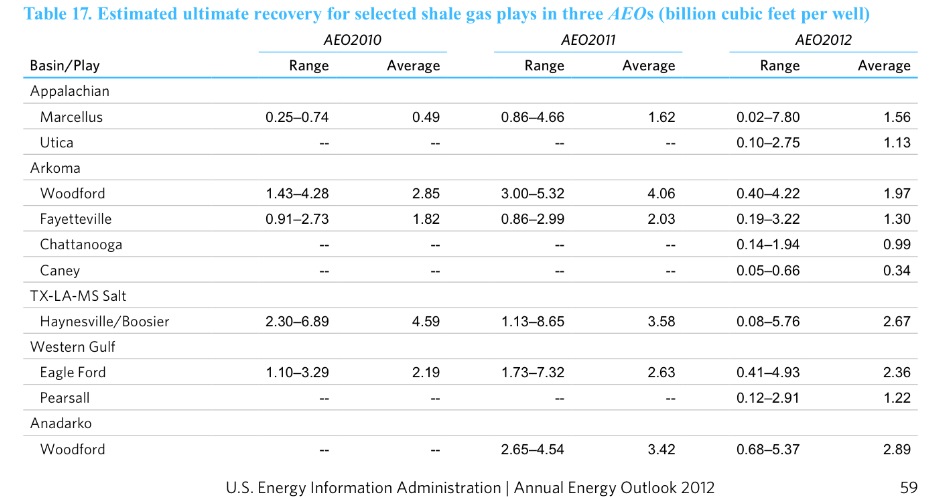
Changing estimates of reserves per well for the major shale plays

Posted in Uncategorized | Leave a comment

By 2035, more than 2/3 of domestic gas production will be from shales or tight rocks. #fracking

From EIA’s Annual Energy Outlook 2012:

Posted in Uncategorized | Leave a comment

“Hyperbolic Decline” in shale gas wells has strong policy implications

From EIA’s Annual Energy Outlook 2012:

Posted in Uncategorized | Leave a comment

Energy use, per capita and per dollar of GDP

From EIA’s Annual Energy Outlook 2012:

Posted in Uncategorized | Leave a comment

Impact of shale drilling on gas prices

Shale drilling has not only reduced the wellhead price of gas to 1/7th the energy cost of 1 barrel of West Texas Intermediate, gas prices are a lot less volatile than before.

Posted in Uncategorized | Leave a comment

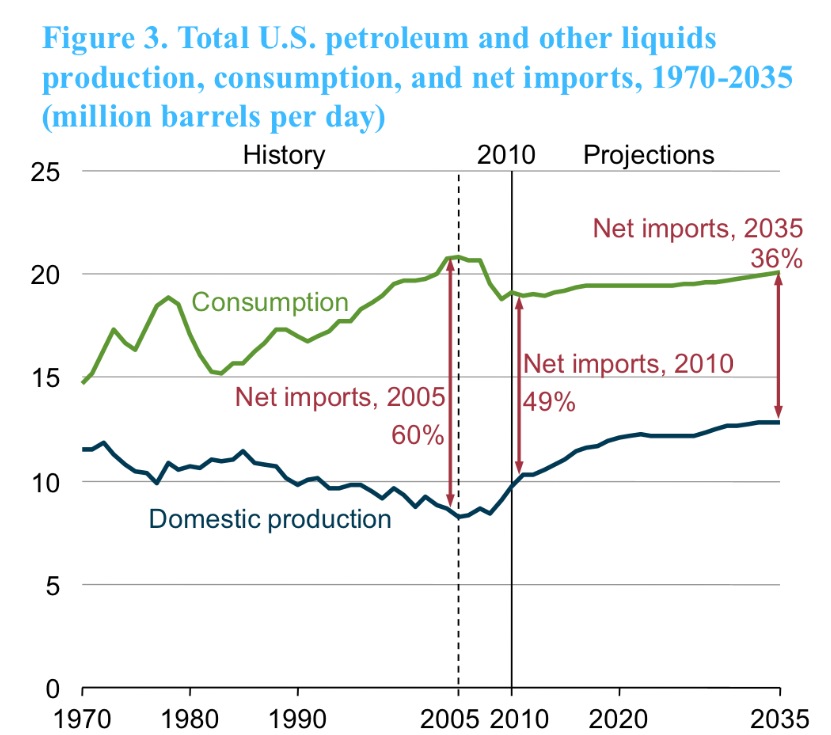
EIA expects production surge from “tight oil”, declining imports through 2035

From EIA’s Annual Energy Outlook 2012:

Posted in Uncategorized | Leave a comment