Flashback to 2009: Administration Policies Sought to Discourage ‘Overproduction’ of Oil

In May 2009, four months into the Obama presidency, retail gasoline prices averaged $2.32 per gallon. Rep. Charles Boustany (R-LA) wrote Treasury Secretary Tim Geithner to express concern about the impact that the Administration’s budgeted changes in tax policy would have on the oil and gas industry. Secretary Geithner clearly laid out the Administration position in his letter of response (pdf link).

That was then, this is now.

In just three years’ time, retail gasoline prices are up 68%. $4.00+ gasoline prices loom as a key reelection vulnerability for the President; in response, the Administration’s rhetoric has shifted to “energy friendly”, but its original energy-hostile policies have not changed a whit.

From Secretary Geithner’s May 2009 letter:

The Administration believes that oil and gas preferences distort markets by encouraging more investment in the oil and gas industry than would occur under a neutral system. To the extent the credit (sic) encourages overproduction of oil, it is detrimental to long-term energy security and is also inconsistent with the Administration’s policy of reducing carbon emissions and encouraging the use of renewable energy sources through a cap-and-trade program. Moreover, the credit (sic) must ultimately be financed with taxes that result in underinvestment in other, potentially more productive, areas of the economy.

The President campaigned on the idea that, if we are to finally reduce our dependence on foreign oil, we need to set aside old political battles and instead make the investments in new clean energy technology that will create good jobs here at home.

So, to recap:

Continue reading

Posted in Energy | 2 Comments

We have a ‘deputy assistant to the president for energy and climate change’. What more do you need to know?

Gulf of Mexico back to ‘robust’ oil production, Obama administration says

WASHINGTON — A one-year progress report on the Obama administration’s Blueprint for a Secure Energy Policy offers a sanguine portrait of increased domestic energy production and reduced reliance on foreign oil since the president took office. The report, presented to the president Monday by a Cabinet-level task force, asserted that the administration had brought what Interior Secretary Ken Salazar called, “the sweet spot of America, and that’s the Gulf of Mexico,” safely back to “robust” production.

“Since we put in place new safety standards in the wake of the Gulf oil spill, we have approved more than 400 drilling permits. In fact, we are now permitting at levels seen before the spill, all while meeting these important new standards,” reads the report authored by the secretaries of Interior, Agriculture, Housing and Urban Development, Energy and Transportation, the administrator of the Environmental Protection Agency and Heather Zichal, deputy assistant to the president for energy and climate change.

The American Petroleum Institute replied that “we are hearing a lot about the administration’s leadership in driving oil production up. The fact is that production on federal offshore and onshore areas is down.”

According to API, “There are certainly positives, however, today’s production increases relate to projects begun before the administration came into office and progress happening on state and private lands. The most significant oil production that the administration has control over is the offshore, and that has been restricted to the Gulf.”

API cited figures from the U.S. Energy Information Agency indicating that oil production in the Gulf was down 22% in 2011 and projected to be down 30% in 2012 as compared to production forecasts before the Obama administration imposed a moratorium on deepwater drilling after the BP disaster.

Emphasis added. Irony in the original.

More on our deputy assistant to the president for energy and climate change:

Heather Zichal (born February 8, 1976)[1] is the Deputy Assistant to the President for Energy and Climate Change, serving in the Barack Obama administration since 2009. Following the early 2011 departure of Carol Browner from the administration, Zichal gained the general responsibility of coordinating the administration’s energy and climate policy. Zichal previously served as a legislative director and campaign advisor to several Democratic Party congressional members. …

She attended Cook College at Rutgers University, where she studied environmental policy and graduated in 1999.

While at Rutgers she had interned at the state chapter of the Sierra Club and was part of a panel interviewing candidates for U.S. House of Representatives in New Jersey’s 12th congressional district. …

After serving on the Obama-Biden Transition Project in its Energy and Environment Policy Working Group, where she achieved some public visibility, she was named to be Deputy Assistant to the President for Energy and Climate Change in December 2008, to serve as deputy to Carol Browner, who was named director of the White House Office of Energy and Climate Change Policy (as such, Browner’s position was also informally referred to as the “Climate Czar” or “Energy Czar”). Zichal took office in January 2009.

… (the “czar” position itself having been reorganized away by the White House and its funding subsequently abolished by Congress in the mid-April 2011 federal spending agreement that averted a possible government shutdown).

Posted in Energy, Environment | Leave a comment

Obama, Energy Promises, and Empty Rhetoric

Voters in the November election will be acutely aware of two key economic variables above all others: the national unemployment rate, and the price they pay for a gallon of gasoline. President Obama senses his vulnerability on gasoline prices, and is busy erecting a defense against charges that his actions (or inactions) have contributed to high prices.

His weekly radio address focused on the problem of rising gasoline prices and energy policy in general:

Ending this cycle of rising gas prices won’t be easy, and it won’t happen overnight. But that’s why you sent us to Washington – to solve tough problems like this one. So I’m going to keep doing everything I can to help you save money on gas, both right now and in the future.

Earlier this week, Obama said that gasoline prices are rising in part because of international bottlenecks and supply disruptions that affect the crude oil market.

Obama cites bottlenecks, speculation as possible gasoline price factors

US President Barack Obama said his administration is looking at whether it would be possible to ease both international and US supply bottlenecks as an immediate response to rising gasoline prices. … “We’re concerned about what’s happening in terms of production around the world. It’s not just what’s happening in the [Persian] Gulf. You’ve had, for example, in Sudan, some oil that’s been taken offline that’s helping to restrict supply.”

In its Mar. 6 Short-Term Energy Outlook (STEO), the US Energy Information Administration said several notable production disruptions outside the Organization of Petroleum Exporting Countries began or intensified during the last 2 months, leaving an average 1 million b/d [barrels per day] offline in February.

Those production disruptions include a year-on-year loss of 230,000 b/d in the Sudan, 80,000 b/d in Yemen, and 140,000 b/d in Syria. That’s 470,000 b/d total shortfall from just those three hotspots. Continue reading

Posted in Energy | 5 Comments

CARPE DIEM: N. Dakota Sets New Oil Record in Jan.; now #3 oil state? #rsrh

.http://mjperry.blogspot.com/2012/03/north-dakota-sets-new-oil-record-in.html

Posted in Uncategorized | Leave a comment

Wind Farms In Pacific Northwest Paid To Not Produce #rsrh

http://www.foxnews.com/politics/2012/03/07/wind-power-companies-paid-to-not-produce/?test=latestnews

Posted in Uncategorized | 1 Comment

Correcting Rush on the Big Energy Lie

Rush Limbaugh is on a rant right now about the Big Energy Lie – President Obama’s assertion that:

“We can’t just drill our way out of this problem — while we consume 20% of the world’s oil, we only have 2% of the world’s oil reserves,” he said. [Source.]

Rush confused the issue with regard to the definition of reserves, suggesting that it has something to do with how much oil has been produced to date. It does not.

Reserves are the amount still in the ground that have been found by drilling efforts to date, and are expected to be produced with current technology, at current prices.

Reserves have been around 10 years of production ever since I can remember. That’s because energy companies measure their success by their ability to “replace production” – that is, if they produce a million barrels, they need to replace it with a million barrels of reserves. It’s like a current inventory.

Or like a checking account. Continue reading

Posted in Energy | Tagged , | 4 Comments

Jamie Bergeron’s Song “Registered Coonass” Causes Controversy

http://cajunradio.net/jamie-bergerons-song-registered-coonass-causes-controversy-audio/

Posted in Uncategorized | Leave a comment

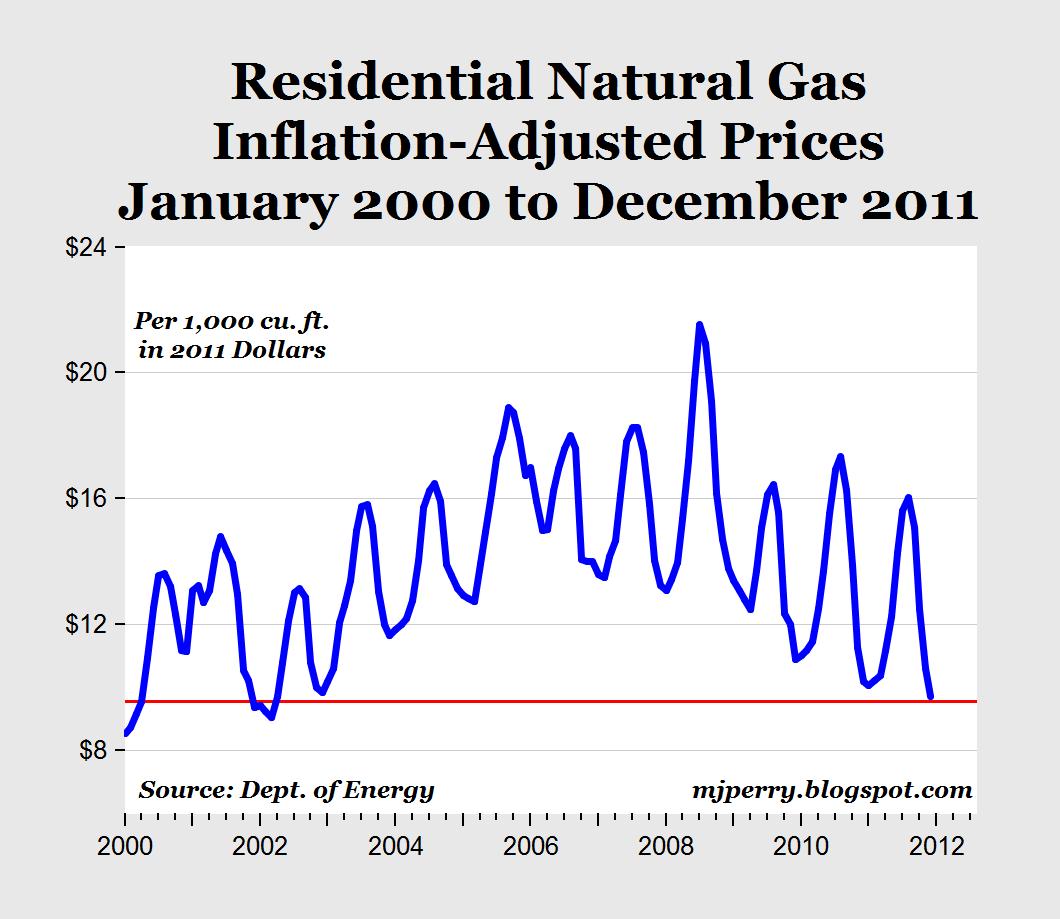
CARPE DIEM blog: Residential Natural Gas Prices: Lowest in a Decade #rsrh

http://mjperry.blogspot.com/2012/03/residential-natural-gas-prices-are.html

Just remember: Drill, Drill, Drill doesn’t work because our Dear President said it doesn’t.

Posted in Uncategorized | 1 Comment

Wetlands mitigation rules get tougher, quadrupling the cost of developing in St. Tammany Parish

http://www.nola.com/environment/index.ssf/2012/03/wetlands_mitigation_rules_get.html

Posted in Uncategorized | Leave a comment

Second Line!

Congratulations to Colleen & Jacob!

–more to come–

F.O.B.

Posted in Uncategorized | Leave a comment