Oil Spill Reality Check

God willing, the Gulf Coast may be spared Prince-William-Sound-like images of waves of tarry goo slapping ashore, while wild birds and cuddly mammals struggle for survival in asphaltine muck.

Last Friday, the Lafayette Daily Advertiser reported on the rescue of the first oil-covered bird Louisiana:

It was the only animal being cleaned late Friday morning, but rescuers expected many more to come in throughout the day.

Hmmm. Seen any more pictures? Me either.

Today’s news brings reports of dead jellyfish

… it’s not uncommon to see jellyfish floating dead during high winds, but the number of dead found so far is beyond normal.

and sea turtles in Mississippi, at least 25 miles from the leading edge of the advancing oil.

Although this is the time of year when dead turtles are often found on the beach, scientists say the number is more than double what they would expect.

What gives?

Several factors may be at play in diminishing the shore impact of the current spill.

  1. Natural wave action will aerate and break up the slick. Chemical dispersants are being applied to speed up the process.
  2. The oil is lighter than the Alaskan crude from the Valdez spill, and hence is more prone to evaporate.
  3. The source of this spill is in open water some 50 miles from the nearest land, so the dispersants, the responders and Mother Nature have some time to do their thing before landfall.

If we apply a few calculations, we can figure out how dispersed the oil might be.

BP’s estimate is that the well is making some 5,000 barrels of crude oil per day. For convenience, we’ll say the well has been flowing for 14 days, or 70,000 barrels total. One barrel is 5.615 cubic feet, so the total volume of spilled oil is something like 400,000 cubic feet.

Let’s say the size of the spill is 50 miles by 50 miles, or 2,500 square miles. (Actually, as the New York Times graphic below shows, the estimated overall size of the spill is more like 5,100 square miles.)

Four hundred thousand cubic feet of oil over 2,500 square miles is 160 cu ft per square mile, or just 1/4 cubic foot per acre. Spread uniformly over the entire 50 mi x 50 mi area, that would equate to a layer of oil 0.00007 inches thick.

And that’s if none of the oil has evaporated, which it has.

As we’ve seen in the pictures, the oil does tend to clump up in thicker ribbons. But the fact remains that much of the 5,100 sq mi is covered by “sheen”, which is what you get on the surface of a swimming pool if you go in after applying a generous layer of Coppertone.

None of this is intended to minimize the potential for damage to specific populations and localized areas. For example, a brown pelican rookery was devastated just a few years ago by a small volume of oil spilled in a very vulnerable place at a very vulnerable time.

As disappointing as it may be to some journos and enviros, I suspect that the jellyfish and the sea turtle kills are natural events, unrelated to the oil spill. I’m praying that this spill event will end in the near future without a calamitous impact on either the wildlife or the human population of the Gulf Coast.

Cross-posted at RedState.com.

Posted in Uncategorized | Comments Off on Oil Spill Reality Check

Q: Why was BP drilling in 5,000 ft of water?

A: Because we demanded it, you and I.

“It” being a reasonably inexpensive, plentiful and secure supply of petroleum products, gasoline in particular. We don’t like gas lines or $8.00 per gallon. We really don’t like gas lines and $8.00 per gallon.

We also decided that we didn’t want it to come from our own back yards. It shouldn’t mess up our postcard views from 30 story condo developments. We also decided we didn’t want it to interfere with the nesting season of the sage grouse or the mating habits of the pronghorn antelope.

We want gasoline to be as reliable as electricity, and we don’t want to give any thought to where it comes from.

In order to satisfy our demand, large multinational oil companies must find oil in large fields, capable of producing at high rates of flow. Most of the producing basins in the U.S. are so mature, so “picked over”, that the odds of finding a new, world class discovery comparable to those in the Middle East or Africa, are very, very low.

Operating in the developing world has its special risks. Many oilfields and much of the infrastructure that has been developed by Western companies has been expropriated by local regimes in places like Saudi Arabia, Libya, Venezuela, and most recently, Ecuador.

The political risk is less in the U.S., where (at least historically) there has been respect for contracts, land title and the rule of law.

We’ve placed promising areas like the Eastern Gulf of Mexico, the East Coast, offshore California, offshore Alaska and ANWR off limits. This current spill will provide ammunition for the anti development folks. But since our collective thirst for petroleum will be unabated, that will mean more oil and refined products will have to be imported in tankers, with their accompanying risk of spill.

So the only place in the U.S. that is welcoming to the petroleum industry and highly prospective for large discoveries is the deepwater Gulf of Mexico. In the last few years, successful drilling has indicated the potential of billions of barrels of reserves. But it will have risk, too.

And there’s the frustration. Some will want use this spill in 5,000 feet of water as the reason to stop drilling anywhere domestically. Deepwater drilling is challenging for several reasons. Geomechanically, the wells are more challenging to drill than land wells, requiring more casing strings to be set for hole stability. On land or in shallow water, the blowout preventer is at the surface; in deepwater they are on the seafloor, much less accessible by men & equipment. Divers can dive to fix things in 50 feet of water, but not 5,000.

Shelf drilling in the Gulf of Mexico has been relatively spill-free for 40 years. Industry has learned how to drill on land from small, minimally impacting footprints. We should not react emotionally to the Deepwater Horizon disaster, but learn from its lessons and figure out a more sensible domestic exploration policy that builds on existing conventional technologies.

Cross-posted to RedState.com.

Posted in Uncategorized | Comments Off on Q: Why was BP drilling in 5,000 ft of water?

Offshore Safety Factoids

MMS’s Annual SAFE Awards Luncheon is usually held in conjunction with the mammoth oil industry trade show, the Offshore Technology Conference in Houston. The SAFE Awards honor those companies with exemplary safety and environmental performance during the previous year. The evaluation is based on records from MMS’s active inspection programs.

This year’s SAFE Awards Luncheon, scheduled during next week’s OTC, has been postponed due to the ongoing Deepwater Horizon incident.

Oh, by the way, among the 2010 SAFE Award finalists: BP Exploration & Production Inc.

Just sayin’.

The President promised today to send Department of the Interior “SWAT teams” offshore “to investigate oil rigs”.

For years, the MMS has had an active inspection program for drilling rigs and production platforms. Violators may receive “warning INCs” (for Incident of Non-Compliance) for minor technical violations to civil penalties for more serious violations of the regulations.

For FY 2010, Congress directed MMS to raise $10 million from operators by, for the first time, charging a fee for inspections. Fees range from $2,000 to $6,000 per platform.Our small company had an overnight effective tax increase of $25,000.

So, this spectacle of the government suddenly acting as if all that is needed is “more inspection” is pretty much what I was expecting.

Cross-posted at RedState.com.

Posted in Uncategorized | Comments Off on Offshore Safety Factoids

More Health Care Reform Surprises: 1099s

Our nightmare future is starting to look more like Brazil (1985) than Red Dawn (1984). Or maybe it’s starting to look more like 1984.

This, from a post by Chris Edwards at Cato@Liberty…

Costly IRS Mandate Slipped into Health Bill

A few wording changes to the tax code’s section 6041 regarding 1099 reporting were slipped into the 2000-page health legislation. The changes will force millions of businesses to issue hundreds of millions, perhaps billions, of additional IRS Form 1099s every year. It appears to be a costly, anti-business nightmare. …

Basically, businesses will have to issue 1099s whenever they do more than $600 of business with another entity in a year. For the $14 trillion U.S. economy, that’s a hell of a lot of 1099s. When a business buys a $1,000 used car, it will have to gather information on the seller and mail 1099s to the seller and the IRS. When a small shop owner pays her rent, she will have to send a 1099 to the landlord and IRS. Recipients of the vast flood of these forms will have to match them with existing accounting records. There will be huge numbers of errors and mismatches, which will probably generate many costly battles with the IRS.

This is another one of those business burdens that fall disproportionately on small business. Large business do most of their business with other corporations anyway, and probably report a lot of unrequired 1099s just to be safe. Since corporations typically transact with each other via auditable transactions anyway, the information is largely redundant.

But the small businessman or woman must is now on the hook for determining the tax ID number of virtually everyone with whom they transact business, in the time frame between January 1 and January 31 every year.

Of course, a lot of crap flew under the radar in the Health Care Bill. One of the few groups that did manage to get its concerns on the record was the Air Conditioner Contractors of America:

The House bill would extend the Form 1099 filing requirement to ALL vendors (including corporate) to which they pay more than $600 annually for services or property. Consider all the payments a small business makes in the course of business, paying for things such as computers, software, office supplies, and fuel to services, including janitorial services, coffee services, and package delivery services.

In order to file all these 1099s, you’ll need to collect the necessary information from all your service providers. In order to comply with the law, you would have to get a Taxpayer Information Number or TIN from the business. If the vendor does not supply you with a TIN, you are obligated to withhold on your payments.

This is one of the provisions that had Nancy Pelosi anxious to pass the bill so that we could find out what was in it. Yippee.

H/T dennism (my CPA).

Cross-posted at RedState.com.

Posted in Uncategorized | Comments Off on More Health Care Reform Surprises: 1099s

HuffPo: ‘Global Warming Causes Volcanoes’

Huffington Post blogger DK Matai’s bio claims him to be “an engineer turned entrepreneur, investor and philanthropist with a keen interest in the well being of global society”.

If this guy is an engineer, then I’m Lady Gaga.

Did you ever notice that these warming alarmists have a habit of just making stuff up?

In a weekend post titled Are Global Warming, Volcanoes and Earthquakes Linked?, Mr. Matai exposes a less-than-thorough comprehension of earth science and basic engineering principles.

Ice is heavy and exerts enormous pressure on whatever lies beneath it. Under the ice’s weight, the Earth’s crust bends and as the ice melts the crust bounces up again. Imagine a floating cork, topped with a piece of lead. Will it not pop upwards when the lead is taken off? Similarly, a shrinking ice cap reduces the pressure on the earth’s mantle, causing it to melt and creating magma. Also, this frees tectonic plates up to move against each other and cause the friction needed to initiate earthquakes. This tallies with mathematical models that suggest such processes may potentially lead to more earthquakes, tsunamis and volcanic eruptions.

The cork illustration is way off. Each plate of the earth’s crust covers a significant fraction of the globe, not at all like a bobbing cork. Oceanic crust is 5 to 10 kilometers thick, while glacial ice might be a few hundred meters. And the average density of the crust is 2.7 times the density of ice. The mass of a glacier is not significant relative to the mass of the plate on which it rides.

It is true that ice load can deform the crust, and when that load is removed, the crust will rebound. Most of Michigan, for example, is still rebounding from the retreat of the ice cap (N.B. not a glacier) at the end of the last ice age some 12,000 years ago.

Get that? Still rebounding. So no, the crust doesn’t bob like a cork.

And melting ice doesn’t create magma. I’ll leave that explanation to Steven Goddard at wattsupwiththat.com. Suffice it to say that a reduced overburden of a thick ice layer might effect the melting point of underlying magma by half a degree C or so (out of +/-1,500 deg C). Really insignificant.

A thaw of ice caps caused by global warming may trigger more volcanic eruptions in coming decades by removing a vast weight and freeing magma from deep below ground, research suggests.

Research suggests”?! What research? Do you have a cite?

Iceland sits astride a mid-ocean ridge, the site of seafloor spreading and the engine that drives North America and Europe two centimeters further apart every year. Iceland is unusual in that it’s above sea level. If you wait around long enough, you’re going to see magma at the surface, glaciers or no.

Back to the original passage: “This tallies with mathematical models…[etc.]”. Again, what mathematical models? Can you produce or cite just one?

All this talk about earthquakes and volcanoes being the result of Global Warming does raise an interesting question. If, as Mr. Matai would have it, warming caused earthquakes and volcanoes at the end of the last ice age some 12,000 years ago, then that rules out volcanic CO2 as a cause of the end of the ice age.

That means increased atmospheric CO2 was a result, not a cause, of warming.

Gee. Where have I heard that one before?

Cross-posted at RedState.com, as a follow up to the blog Global Warming Causes Earthquakes.’ Suuuuure it does.

Posted in Uncategorized | Comments Off on HuffPo: ‘Global Warming Causes Volcanoes’

Barney Fife and Bovine Teats

It’s a truism in the oil business: When it comes to solving a problem, one’s intelligence is proportional to the square of their distance from the problem.

For those who barely squeaked through Intermediate Algebra, that means that Congress and Washington-based regulators are really, really smart when it comes to diagnosing and solving problems.

</snark>

Before the blazing hulk of the Transocean Horizon disappeared, on its way to its final resting place 5,000 feet below, the inevitable chorus from Washington began a call for tighter regulation, more oversight, and Congressional investigations.

…Sen. Mary Landrieu (D) of Louisiana called for a swift and thorough investigation.

“It is critical that [federal] agencies examine what went wrong and the environmental impact this incident has created,” Sen. Landrieu said in a statement. “These findings should be reported to Congress as soon as possible.” [Source.]

U.S. Sen. Ben Nelson, D-Fla., called for the Interior Department to investigate and provide a comprehensive report on all drilling accidents over the past decade.

“The tragedy off the coast of Louisiana shows we need to be asking a lot more tough questions of Big Oil,” Nelson said. [Source.]

Of course, the Minerals Management Service (MMS) will investigate. It’s what they do. Considering the magnitude of the task and the hostile conditions it operates under, the offshore oil and gas industry has an impressive , safety record, and one that has improved over the years. This most recent accident bears the largest death toll from a domestic marine rig accident since a blowout in 1964 claimed 24 lives on a drilling barge in Louisiana waters (not Federal jurisdiction). (Ironically, the largest loss of life in Federal waters was in the 1970s, when 13 men perished, not as a result of a blowout, but when their emergency survival capsule overturned as a result of improper towing procedures after a rig evacuation.)

More regulation does not mean more safety; a bureaucratic approach to safety actually makes people less focused on safe results and more focused on CYA paperwork. These days, safety manuals and operating procedures are measured, not by the page, but by the pound. MMS emphasizes training and formal certification for workers, when the emphasis should really be on common sense and developing a safety mindset in workers of all levels.

MMS HQ in Washington encourages this bureaucratic mindset. It sets enforcement quotas for MMS inspectors, and sees fewer enforcement actions as evidence of lax inspection, not improved safety conditions. Regulations are written by desk jockeys with little or no actual operating experience, and hence zero appreciation for the practicalities of their implementation. A line in an AP wire story reveals the attitude:

The U.S. Minerals and Management Service [sic] is developing regulations aimed at preventing human error, which it identified as a factor in many of the more than 1,400 offshore oil drilling accidents between 2001 and 2007. [Source. Emphasis added.]

Why not develop regulations preventing gravity? It would be easier, and fewer workers would be killed by falling objects.

MMS has some experienced and effective people in engineering and supervisory levels. A push from Washington for more inspection will mean more inspectors with less experience. The problem is that the distant and politically-motivated HQ staff in Washington encourages enforcement that is more Barney Fife than Sheriff Taylor. To you younger folks who miss my reference to the old Andy Griffith Show, that means enforcement becomes more adversarial and blindly “by the book” than it is collaborative, supportive and helpful.

Congressional oversight? Puh-lease. Most in Congress are only looking for a public stage upon which to perform their Congress-schtick. Our congressman, Rep. Charles Boustany (R-LA7) shared an anecdote with a local industry group sometime last year. He had organized an educational field trip for a group of 10 Representatives, 5 Republicans and 5 Democrats, to visit working drilling and producing operations in the Louisiana sector of the Gulf of Mexico.

Speaker Pelosi canceled the trip as soon as she got wind of it. For a Congressperson to know a little about the industry they’re regulating, it seems, would be a bad thing.

Congress is ignorant of the issues, and seems to like it that way: “All the better to bloviate, my dear.”. We should be asking them hard questions, and demanding accountability, not vice versa. Their involvement in offshore safety will only energize and empower the bureaucrats, a guaranteed way to muck things up but good.

My granddad would have said that Congress is “as worthless as tits on a bull”. Hence the title of my diary.

The fact is, the offshore oil and gas business is motivated to be safe and environmentally responsible for many reasons that have nothing to do with regulatory oversight. Operators know that the cost of cutting corners is much higher than doing the right thing in the first place. Worker injuries and fatalities are not covered by workers’ compensation as they would be on land; on mobile vessels, workers are considered seamen and thus are covered by the Jones Act, so an accident means they have a cause of action against their employer in Federal court. (This makes Louisiana heaven for personal injury attorneys.)

Modern oil and gas operators realize that clean, safe operations are the most profitable. We have yet to figure out how to make a nickel by spilling oil or by recklessly exposing workers to job hazards.

Cross-posted to RedState.com.

Posted in Uncategorized | Comments Off on Barney Fife and Bovine Teats

‘Global Warming Causes Earthquakes.’ Sure it does.

In a CNN commentary entitled Is the Earth Striking Back?, journalist and author Alan Weisman opines on the relationship between Anthropogenic Global Warming and a recent spate of powerful earthquakes:

As [the glaciers] flow off the land, we are warned, seas rise. Yet something else is lately worrying geologists: the likelihood that the Earth’s crust, relieved of so much formidable weight of ice borne for many thousands of years, has begun to stretch and rebound.

As it does, a volcano awakens in Iceland (with another, larger and adjacent to still-erupting Eyjafjallajokull, threatening to detonate next). The Earth shudders in Haiti. Then Chile. Then western China. Mexicali-Calexico. The Solomon Islands. Spain. New Guinea. And those are just the big ones, 6+ on the Richter scale, and just in 2010. And it’s only April.   [Emphasis mine.]

Mr. Weisman, I challenge you to name just one reputable geologist who’ll admit to that “worry”.Alan Weisman is a journalist and author of the book The World Without Us, which is fodder for a TV show of the same name on one of the bug channels on the cable.

First of all, the earth is really big. The crustal plates that are being moved by the forces of plate tectonics are really big. The North American plate moves away from the Eurasian plate at a rate of a couple of centimeters per year. It takes an almost inconceivable amount of force acting over a really large area to move that much mass.

In scale, a glacier is not even a pimple on Mother Gaia’s backside. The Eyjafjallajokull glacier is about 8 miles E-W by 5 miles N-S.

Secondly, note that the recent earthquakes cited by Mr. Weisman are all in temperate or tropical zones. If the glaciers were directly causing disruption of the plates and plate boundaries, wouldn’t you think the earthquakes would occur first and worst near the sites of glacier loss?

Instead, the earthquakes occurred where they are supposed to occur, at plate boundaries. Most earthquakes and volcanic activity occurs at or near these plate boundaries, precisely because of the inexorable movement of the plates relative to each other, and the incredible buildup of energy at the plate margins.

Mr. Weisman’s commentary is particularly offensive because his title suggests a desire to anthropomorphize Mother Gaia while invoking unidentified geologists’ phantom-science opinions.

Bullcrap.

Oh, and one more thing: “…the Earth’s crust, relieved of so much formidable weight of ice borne for many thousands of years…” Mr. Weisman suffers, as do many scientific illiterates, that what we’ve experienced in our lifetimes is “normal”, and that any deviation from that familiar normalcy is, by definition, bad.

However much of that “formidable weight” has supposedly vanished in the last 150 years, multiply it by about a billion and you’ve got an idea of what happened when the last ice age ended, rather suddenly and with no human assistance, about 13,000 years ago. That’s a blink of an eye in geologic terms. If glacial melting really did trigger earthquakes and volcanoes as you imagine, that effect would be ongoing today.

Cross-posted at RedState.com.

Posted in Uncategorized | Comments Off on ‘Global Warming Causes Earthquakes.’ Sure it does.

Please pray for the missing eleven. Last night, April 20 about 10 p.m. CDT, an explosion a

Please pray for the missing eleven.

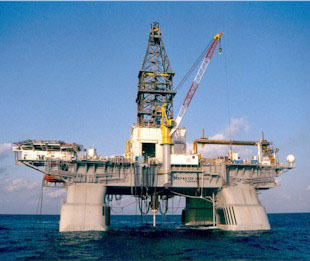
Last night, April 20 about 10 p.m. CDT, an explosion and fire erupted on the Deepwater Horizon, a semisubmersible drilling rig owned by Transocean Ltd., and contracted to BP Exploration & Production, Inc.

Of the 151 hands on board, 17 are injured and 11 still missing at this hour.

The Horizon was working in 5,000 feet of water and had just finished drilling an exploratory well to 18,000 from the surface. Speculation on the cause of the fire centers on a blowout, an uncontrolled flow of oil and gas to the surface.

The Horizon entered service in 2001. Replacement value of the rig is estimated at $600 million. It was working for BP at a day rate of just shy of $500,000 per day.

Cross-posted at RedState.com.

Posted in Uncategorized | Comments Off on Please pray for the missing eleven. Last night, April 20 about 10 p.m. CDT, an explosion a

A Rational Look At Climate Science

Oxford University’s Tim Palmer is a professor of climate physics. Interviewed for an article in Sunday’s Guardian, “Feel free to doubt climate change: just don’t deny it”, he touched on climate skepticism, “denialism”, and a topic not often broached by the Climate Change community: Uncertainty.

You may be confident that your house will not burn down this year, but you would be considered a fool by many people if you failed to take out insurance. And so it is with climate change. The detailed nature of global warming’s impact on the planet is not yet agreed by scientists. It could be dreadful; it could be limited. It might destroy vast stretches of the planet’s farmlands and send deserts spreading round the globe. Or it might merely result in sea level rises that inundate parts of Bangladesh and Florida and not much else.

There might be a 50% risk of widespread problems or possibly only 1%,” says Palmer. “Frankly, I would have said a risk of 1% was sufficient for us to take the problem seriously enough to start thinking about reducing emissions.”

OK, now we’ve found a climate scientist that speaks rationally, not a ManBearPig warming alarmist who thinks people will only be motivated to action if they’re scared out of their wits.

But there’s a problem with Prof. Palmer’s analogy.

Continue reading

Posted in Uncategorized | Comments Off on A Rational Look At Climate Science

Keeping Mother Gaia Safe From Warming Skeptics

Individuals who made Freedom of Information inquiries of the University of East Anglia’s Climate Research Unit have come under police scrutiny, including interviews to determine their political beliefs, scientific qualifications, and details regarding computer usage, according to an article in The Financial Times. [Link requires registration.]

Even more troubling, local police are being aided in their investigation by members of the National Domestic Extremism Team, the unit set up to counter home-grown terrorists and radicals. The purported reason for their involvement is their skills in computer forensics and their experience dealing with environmental terrorists.

But it’s curious that, given the very real threat of terrorism, both in the U.K. and the U.S., precious resources are allocated to tracking down a culprit who would be glorified as a “whistleblower” if his politics were different.

The muckraking leftist press glorifies the whistleblower, regardless of the legality of his/her leaked information or the consequences of the leak.

From Daniel Ellsburg with the Pentagon Papers, to ex-CIA agent Philip Agee, to Deep Throat of Watergate fame, to Jeffrey Wigand, the tobacco industry whistleblower, information thieves have been lionized by those who believe that the end justifies the means. This stuff is standard fare for the New York Times, the Washington Post and the network “newsmagazines”.

But this time it’s different; the mainstream press has already chosen sides. It has gone “all in” in support of the Climate Change agenda, and the quest of the U.N. and the statists in their quest for control of the industrialized Western economies. That being the case, they emphasize the “illegality” of the “stolen” or “hacked” emails, all the better to distract from the damning content contained therein.

Cross-posted at RedState.com.

Posted in Uncategorized | Comments Off on Keeping Mother Gaia Safe From Warming Skeptics